The return window is a lab slot: thirty days in which the headphones are yours to stress-test with a full refund behind you. Most people waste it on a casual listen and discover the dead left channel in month three. Here is the five-check routine that catches every defect worth returning over, and every check takes seconds with the tools on this site.
Day 1: channels and seal
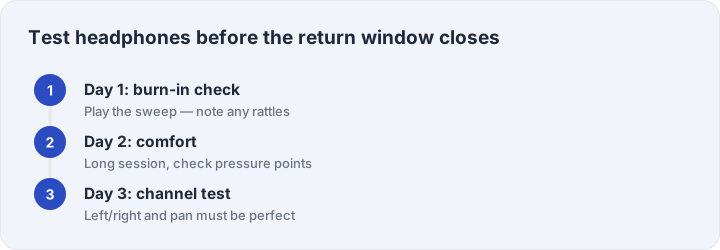
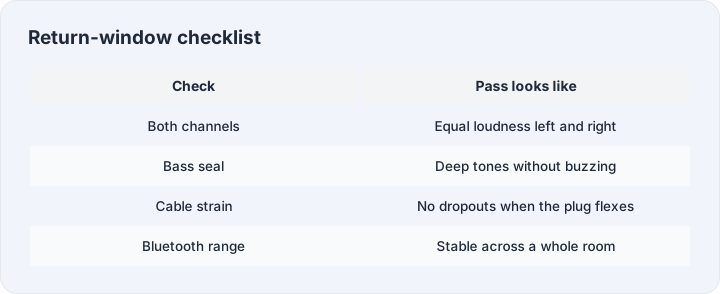
Run the headphone test. Both ears must respond equally to the channel check, and the pan sweep must glide without sticking. Then run the bass test: you are listening for two different failures at once. A buzzing tone at moderate volume is a defective driver — return it. A tone that gains bass when you press the earcup against your head is a seal problem: normal for glasses wearers, but worth knowing about on day one rather than as a “these lost bass” mystery later.
Day 2: cable and connectors
With any tone playing, flex the cable gently at both ends — the plug and the earcup. A crackle or dropout during flexing is a warranty replacement now, not a soldering project later. For detachable cables, wiggle the connector seats too; loose sockets are returnable, worn sockets after a year are not.
Day 2, part two: comfort
Wear them through one real work session, not a two-minute demo. Clamping force that feels “secure” in the store becomes a headache at hour two, and hot-spot pressure on the top of your head does not show up until you sweat a little. Comfort problems are legitimate returns and the most commonly regretted non-return.
Day 3: wireless-specific checks
Walk your actual routine: the route to the kitchen, the desk-to-sofa distance. Stutters where you will actually live are the ones that matter — our cutting-out guide explains which are fixable and which are returns. Check the microphone with the playback test if you take calls: headset mics are the most variable component in the whole product and the easiest to overlook until the first meeting.
Day 3, part two: the burn-in reality check
You will read about “burn-in” transforming a headphone’s sound. What actually changes over the first days is your adaptation, plus possibly a slight suspension softening. Practically: if something bothers you on day one — harsh treble, muddy bass, weird imaging — it will still bother you on day thirty. Decide on defects with the tests above, and on taste with a full week of honest listening. Both are exactly what the return window is for.